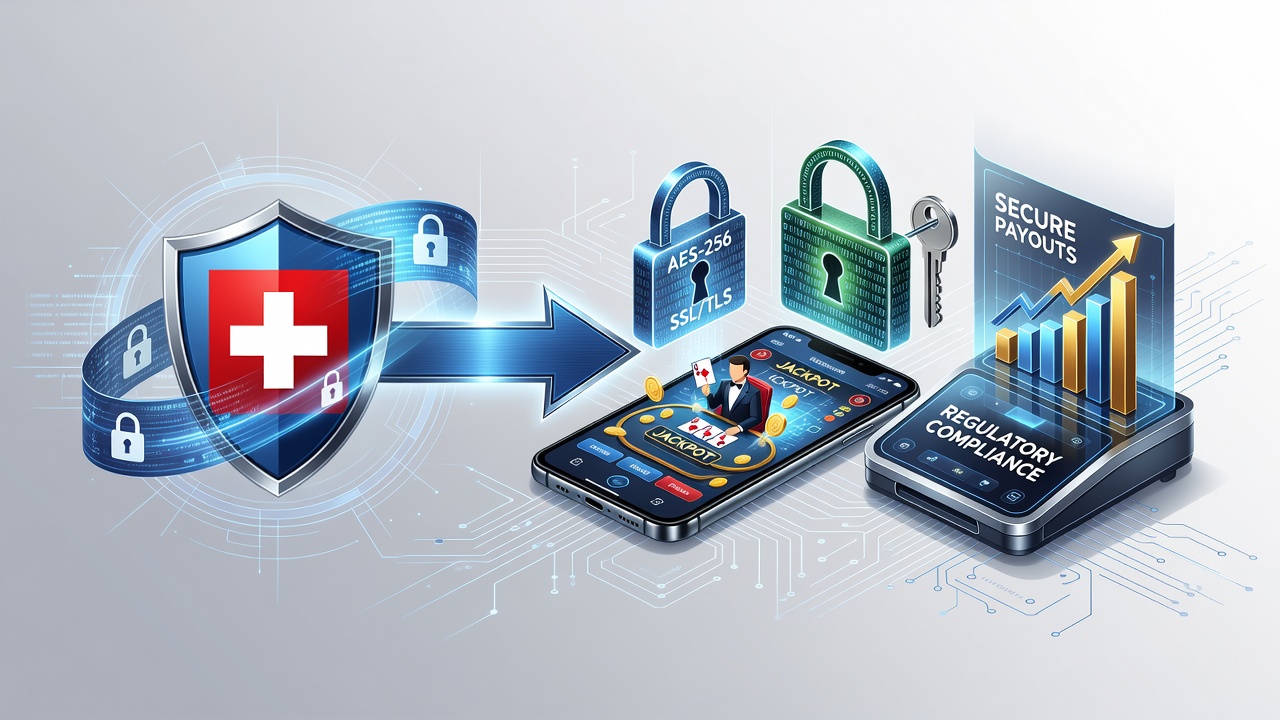
How Swiss Regulatory Updates Shape Encryption Standards for Live Dealer Payouts in Mobile Jackpot Environments
Swiss regulatory frameworks have evolved to address encryption requirements for financial transactions in mobile gambling platforms, particularly those involving live dealer games and progressive jackpots. Updates from federal authorities emphasize secure data transmission during payout processes, with specific attention to real-time interactions between players and dealers on handheld devices. These measures build on existing data protection laws while incorporating technical specifications for cryptographic protocols that protect jackpot wins and related transfers.
Background on Swiss Gambling Oversight
Regulatory bodies in Switzerland monitor online casino operations through the Federal Gaming Board, which coordinates with telecommunications regulators to enforce standards for digital security. Recent revisions to licensing conditions require operators to implement advanced encryption methods for all payout mechanisms, especially when mobile applications handle live dealer sessions that culminate in jackpot distributions. Data from industry reports show increased scrutiny on how encryption keys are managed during cross-border transactions, ensuring compliance wth both national and international norms.
Those who track these developments note that updates often align with broader European cybersecurity initiatives, creating consistent benchmarks for data integrity in high-value gaming environments. Mobile jackpot systems, which rely on continuous server communication, must now demonstrate resistance to interception attempts through layered encryption approaches that cover both video streams and financial ledgers.
Encryption Protocol Requirements
Technical guidelines introduced in recent years mandate the use of specific algorithms for securing payout data, including AES-256 for file encryption and TLS 1.3 for transmission channels. Observers note that these standards apply directly to live dealer interfaces where jackpot triggers occur, requiring operators to encrypt metadata associated with each winning event before it reaches the player's mobile device. Figures from compliance audits reveal that platforms failing to meet these thresholds face extended review periods before license renewal.
Researchers at institutions studying digital finance have documented how Swiss rules intersect with global encryption practices, leading operators to adopt hybrid systems that combine symmetric and asymmetric cryptography. This approach supports seamless live dealer payouts while maintaining audit trails that regulators can access without compromising player privacy. In September 2026, further clarifications are scheduled to address emerging quantum-resistant techniques, reflecting ongoing adaptation to technological shifts.
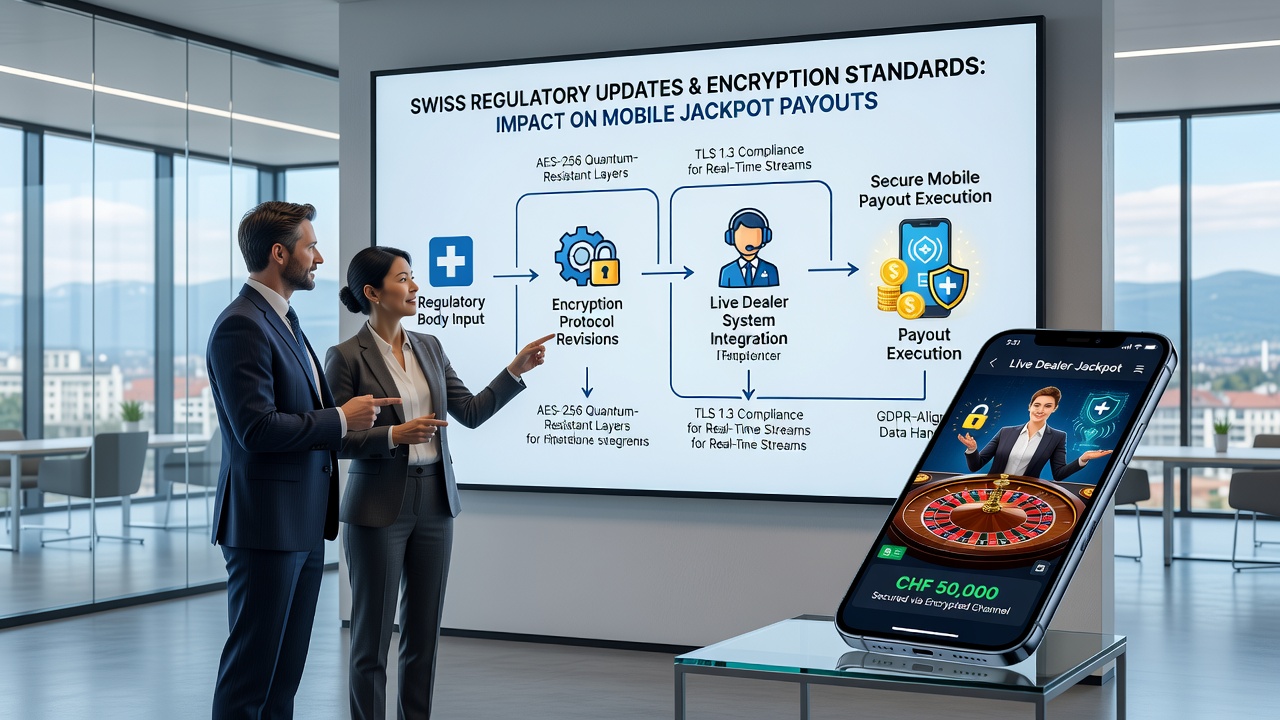
Application to Live Dealer and Mobile Jackpots
Live dealer environments present unique challenges because video feeds and payout confirmations occur simultaneously, demanding encryption that does not introduce latency. Swiss updates require end-to-end protection for all data packets exchanged during these sessions, with particular focus on jackpot accumulation and distribution modules integrated into mobile applications. Industry analyses indicate that operators have responded by deploying hardware security modules to store keys separately from gaming servers.
One study conducted by a European research consortium highlighted cases where mobile platforms adjusted their architectures to comply with new Swiss encryption mandates, resulting in measurable improvements in transaction verification times. Those implementations typically involve real-time key rotation protocols that activate whenever a jackpot payout is processed through a live dealer channel. Canadian regulatory sources on digital security have referenced similar patterns when comparing cross-jurisdictional approaches to mobile gambling infrastructure.
Impact on Operators and Technology Providers
Technology vendors supplying Swiss-licensed platforms must certify that their encryption solutions meet federal specifications before deployment. This process includes third-party testing of mobile applications to verify that jackpot-related communications remain protected against common attack vectors. Data released by the European Union Agency for Cybersecurity shows alignment between Swiss standards and broader EU recommendations on cryptographic strength for financial services.
Operators report that integration of these requirements into existing systems involves collaboration with specialists in both gaming software and cybersecurity. Progressive jackpot networks, which pool contributions across multiple mobile users, now incorporate additional encryption layers to safeguard the integrity of prize pools during live dealer events. Such measures ensure that payout instructions cannot be altered mid-transmission, maintaining trust in the regulatory environment.
Conclusion
Swiss regulatory updates continue to influence encryption standards applied to live dealer payouts within mobile jackpot settings through precise technical mandates and scheduled reviews. These developments create a structured environment where operators and providers align their systems with evolving cryptographic expectations. Ongoing adjustments, including those anticipated for September 2026, demonstrate how federal oversight adapts to technological capabilities while preserving security for transaction processes.